
Saturday, October 26, 2013
A quote to think about...
There are so many quotes that inspire me about children and my students that it was hard for me to pick just one for this post. I have recently been trying to make an effort every day to think about this quote in the way that I talk to each of my students. Sometimes the idea of how much of an influence I can have on their lives and their self confidence can be daunting. But at the same time, I find it to be a great honor and privilege to be able to touch so many children in so many different ways. I have a great job!

Saturday, October 12, 2013
Childhood Assessments
Considering the child in a holistic manner, I think there should more than just one factor in an assessment given to school-aged children to measure their growth. One of the aspects of an assessment I believe should be the cognitive stance of the child compared to other children that same age to give a baseline of their development. I also think children should be assessed on their social competencies and their relationships with other children (ie: working well in a group or solving problems independently etc). I think assessments should be measured based on data of where children can developmentally be at each age. I also think there should be more of a window or range for "successful scores" to allow for children of different ability levels to still be considered showing growth.
Finland is one of the leaders in education in the world and has had an educational reform since the 1970's. Finland does not have standardized assessments to measure student growth. Students in this country receive narrative feedback form their teachers that include examples of growth and suggestions for future growth instead of letter grades. "Samples of students are evaluated on open ended assessments at the end of second and ninth grade to inform curriculum." Students are also the center of their own learning in Finland. It is rare to see a teacher lecturing students in front of a classroom. Most students create their own weekly goals with their teachers and work at their own pace within the curriculum. The center of this curriculum seems to be real world problem solving and higher level reasoning and questioning. The idea is to teach children how to think in an abstract way to solve any problem, regardless of the subject, in a meaningful way.
Reference:
http://www.nea.org/home/40991.htm

Finland is one of the leaders in education in the world and has had an educational reform since the 1970's. Finland does not have standardized assessments to measure student growth. Students in this country receive narrative feedback form their teachers that include examples of growth and suggestions for future growth instead of letter grades. "Samples of students are evaluated on open ended assessments at the end of second and ninth grade to inform curriculum." Students are also the center of their own learning in Finland. It is rare to see a teacher lecturing students in front of a classroom. Most students create their own weekly goals with their teachers and work at their own pace within the curriculum. The center of this curriculum seems to be real world problem solving and higher level reasoning and questioning. The idea is to teach children how to think in an abstract way to solve any problem, regardless of the subject, in a meaningful way.
Reference:
http://www.nea.org/home/40991.htm
Saturday, September 28, 2013
Childhood Stressors
The childhood stressor that I have been most in contact with through working at a homeless women and children's shelter is poverty. I have seen many children living in poverty and the effect it has on them. I have also seen mothers that grew up in poverty that are now raising their children in similar circumstances. The main way I have seen children coping that are living in poverty is to pull close to their siblings. I am thinking of a particular family of three children that at times were living with a violent, drug using and neglectful mother. The children ranged in age of 6, 4, and 2. The children in this family were so bonded to each other and cared for each other. The oldest child acted so much older than he really was. He cared for the younger children and treated them in a way a parent would. I saw these children surviving by relying on their relationship as siblings. This family also relied on government assistance for food and clothing and non profit services for shelter and schooling.
I am interested in researching childhood poverty in the United States. I would like to know more about poverty in our own country because I feel it connects with my first hand experience with this stressor. In 2011 it was reported that 23% of American children (roughly 16 million) are living below the poverty line and their family's annual income is less than $22,00.00 for a family of 4. 1 out of every 4 children are living in a family where they can no longer afford to live in their home. The poverty rate among African American children in the US is 38.2%, which is higher than any other race in the country. One last affect that I found shocking was that only 3 other countries (Mexico, Chile, and Turkey) in the developed world have a higher childhood poverty rate than the US. Some of the things being done to support children in poverty include government assistance like food stamps, and housing assistance. We also provide free and reduced meals in our schools for children living in poverty to reduce the harm of this stressor. There are also countless non profit organizations that provide mentors, food banks, clothing and supply drives and counseling to children living in poverty. The US government also provides monetary support for schools that have a certain number of low income children attending.
References
http://www.pbs.org/wgbh/pages/frontline/social-issues/poor-kids/by-the-numbers-childhood-poverty-in-the-u-s/
http://onpoint.wbur.org/2013/06/25/child-poverty-America

I am interested in researching childhood poverty in the United States. I would like to know more about poverty in our own country because I feel it connects with my first hand experience with this stressor. In 2011 it was reported that 23% of American children (roughly 16 million) are living below the poverty line and their family's annual income is less than $22,00.00 for a family of 4. 1 out of every 4 children are living in a family where they can no longer afford to live in their home. The poverty rate among African American children in the US is 38.2%, which is higher than any other race in the country. One last affect that I found shocking was that only 3 other countries (Mexico, Chile, and Turkey) in the developed world have a higher childhood poverty rate than the US. Some of the things being done to support children in poverty include government assistance like food stamps, and housing assistance. We also provide free and reduced meals in our schools for children living in poverty to reduce the harm of this stressor. There are also countless non profit organizations that provide mentors, food banks, clothing and supply drives and counseling to children living in poverty. The US government also provides monetary support for schools that have a certain number of low income children attending.
References
http://www.pbs.org/wgbh/pages/frontline/social-issues/poor-kids/by-the-numbers-childhood-poverty-in-the-u-s/
http://onpoint.wbur.org/2013/06/25/child-poverty-America
Saturday, September 14, 2013
The Impact of Healthy Water in Child Devleopment
I chose to research this topic because I read that so many people and children are affected by not having clean drinking water throughout the world. I was shocked to read that up to 1 billion people in the world do not have access to healthy drinking water. When I read that statistic, I realized this was a relevant topic to research for anyone in the early childhood field.
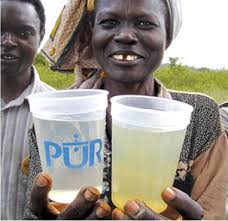
Because this topic is so widespread throughout the world, I decided to research world-wide facts about drinking water and also to focus on facts from Africa. Not only is clean water a problem in Africa, but so is a consistent, stable water supply in general. On average, women and children in Africa have to walk 3.7 miles to collect water. That water is not guaranteed to be clean water or to be free of parasites that could cause sickness or death. I also learned that not only do people around the world have a lack of water supply but they are much more likely to become sick and even die from the water they do consume. One statistic that I found shocking was that "about 1.8 million child-deaths a year are due to diarrhea". which can be caused by un sanitized water and the death can also be caused by dehydration. Africa and Asian countries seem to be suffering from a lack of clean water greatly. "In a typical year in Africa, 5-10 times the number of people die from diarrhea than of war" and "In a sub-Saharan country a child is 500 times more likely to die from diarrhea than a child from Europe".
The more facts I read about the lack of clean water for children in other parts of the world, the more sad and shocked I was. I wondered why this is such a big problem for so many parts of the world, yet in America we use and waste water because we have no restrictions or lack of supply. I wondered why there is such a huge disparity between my life and a child's life in other countries. As I was reading, I also found many organizations that offer help to people living in these water conditions. One example of an organization is The Water Project. Their projects work with communities to build clean water wells and educates people about how to create clean water. The Water Project also encourages people to drink only water for 2 weeks (to save money from not drinking other products) and to donate the money they saved ($23) to provide one person to access to clean water. Another organization that donates packets of cleansing chemicals to communities that purifies their water (P&G Children's Safe Drinking Water and PUR).
The information I have learned in the very least will make me more cognizant of over using and wasting water in my home and every day life. I would also be interested in donating or running fundraiser through The Water Project. They have a free packet on their website with a lot information packets and posters that would make it very easy to start and run a fundraiser in a school or church setting.
Reference
Scott, M. 2009. 40 shocking facts about water. Retrieved September 14, 2013 from http://matadornetwork.com/change/40-shocking-facts-about-water/.


Because this topic is so widespread throughout the world, I decided to research world-wide facts about drinking water and also to focus on facts from Africa. Not only is clean water a problem in Africa, but so is a consistent, stable water supply in general. On average, women and children in Africa have to walk 3.7 miles to collect water. That water is not guaranteed to be clean water or to be free of parasites that could cause sickness or death. I also learned that not only do people around the world have a lack of water supply but they are much more likely to become sick and even die from the water they do consume. One statistic that I found shocking was that "about 1.8 million child-deaths a year are due to diarrhea". which can be caused by un sanitized water and the death can also be caused by dehydration. Africa and Asian countries seem to be suffering from a lack of clean water greatly. "In a typical year in Africa, 5-10 times the number of people die from diarrhea than of war" and "In a sub-Saharan country a child is 500 times more likely to die from diarrhea than a child from Europe".
The more facts I read about the lack of clean water for children in other parts of the world, the more sad and shocked I was. I wondered why this is such a big problem for so many parts of the world, yet in America we use and waste water because we have no restrictions or lack of supply. I wondered why there is such a huge disparity between my life and a child's life in other countries. As I was reading, I also found many organizations that offer help to people living in these water conditions. One example of an organization is The Water Project. Their projects work with communities to build clean water wells and educates people about how to create clean water. The Water Project also encourages people to drink only water for 2 weeks (to save money from not drinking other products) and to donate the money they saved ($23) to provide one person to access to clean water. Another organization that donates packets of cleansing chemicals to communities that purifies their water (P&G Children's Safe Drinking Water and PUR).
The information I have learned in the very least will make me more cognizant of over using and wasting water in my home and every day life. I would also be interested in donating or running fundraiser through The Water Project. They have a free packet on their website with a lot information packets and posters that would make it very easy to start and run a fundraiser in a school or church setting.
Reference
Scott, M. 2009. 40 shocking facts about water. Retrieved September 14, 2013 from http://matadornetwork.com/change/40-shocking-facts-about-water/.
Saturday, September 7, 2013
A Birthing Experience
I have never been able to witness a birth first-hand, so I am going to reflect on what I have been told by my parents about my own birth. I am the second child of my mother's and was carried full term. My older brother was born via cesarean after almost 12 hours of labor. My mother wanted to have a natural childbirth free of medications or surgeries if possible. I was born in a hospital in Baltimore, MD after almost 12 hours of labor. The main story my mother has told me over and over again is that she was very upset and scared towards the end of her labor because her doctor had to use forceps for me to be delivered. I also know that my mother was relived to find out I was "only" 10 pounds because my older brother was 12 pounds. My personal thoughts on childbirth are that everyone has a different experience. I think that every woman has to decide what is right for her body and her baby and should feel accepted by the people around her for her decisions. I think that childbirth a lot of times is the first glimpse into how a person will parent their child. I know for myself, my mother had as natural a childbirth as she could in the early 1980's and her parenting styled mimicked her births in that way.
I explored childbirth in the Philippines. I was interested in this country because I lived there for 3 years when I was in elementary and middle school. I always love to learn more about that country through adult eyes. What I read said that there is often a lot of superstition practices throughout a woman's pregnancy and also tied to the use of birth control in this country. There were two main options for the actual childbirth. The first was government run hospitals for the nearly 40% of urban poor or at home childbirth. I also read that childbirth can be seen as a family event and there is not much privacy for a laboring woman. Every female relative is usually present at a birth and throughout the labor. What I read of the government run hospitals for much of the urban poor is that you need to have cash and family members to care for you during your labor. The cash is so that you can pay for the materials that are needed for you labor or baby. I also read that in some government run hospitals, sanitary practices are not the same as those in the United States. One midwife described a doctor running surgical instruments under tap water before using them on a mother and having 4-5 mothers laboring in a group bed at the same time. Researching births in other countries is interesting to me because even though people birth different ways and may not have all the luxuries we have in the US, woman still have beautiful experiences that end with beautiful children.

I explored childbirth in the Philippines. I was interested in this country because I lived there for 3 years when I was in elementary and middle school. I always love to learn more about that country through adult eyes. What I read said that there is often a lot of superstition practices throughout a woman's pregnancy and also tied to the use of birth control in this country. There were two main options for the actual childbirth. The first was government run hospitals for the nearly 40% of urban poor or at home childbirth. I also read that childbirth can be seen as a family event and there is not much privacy for a laboring woman. Every female relative is usually present at a birth and throughout the labor. What I read of the government run hospitals for much of the urban poor is that you need to have cash and family members to care for you during your labor. The cash is so that you can pay for the materials that are needed for you labor or baby. I also read that in some government run hospitals, sanitary practices are not the same as those in the United States. One midwife described a doctor running surgical instruments under tap water before using them on a mother and having 4-5 mothers laboring in a group bed at the same time. Researching births in other countries is interesting to me because even though people birth different ways and may not have all the luxuries we have in the US, woman still have beautiful experiences that end with beautiful children.

Saturday, August 17, 2013
A Few Code of Ethics in Early Childhood
Responsive Family Centered Practices (DEC)
of services for their children.
~In the school I work in we have multiple professional development seminars on ways to not only involve parents but ways to keep parents informed about what is going on in their child's classroom. I also send home a weekly news update to all of my parents that include curriculum goals and objectives as well as upcoming activities in the school. My school website also has many hot links to websites that are great educational resources at home.
PROFESSIONAL DEVELOPMENT AND PREPARATION (DEC)
1. We shall engage in ongoing and systematic reflective inquiry and self-assessment for the
with disabilities and their families.
~20% of every observation I have from my administrators is based on a student lead objective or goal that I have set at the beginning of the year. This goal is a way for me to track data and progress of a targeted group of students. It is also a way for me to be accountable and reflective upon the growth of my students. In my classroom I have multiple children that have IEP goals and ELL goals, these students are part of my observation goals and tie into this code of ethics.
Ethical Responsibilities to Colleagues (NAEYC)
~ I am able to work very closely with the team mates in my school. We formally meet once a week to plan our next week's instruction and goals. We also meet once a week for professional development and once per month for staff development. I have gained a priceless amount of information and wisdom from working so closely with my team. The amount of information we share is so valuable for not only myself, but also for the students we work with.
NAEYC. (2005, April). Code of ethical conduct and statement of commitment. Retrieved May 26, 2010, fromhttp://www.naeyc.org/files/naeyc/file/positions/PSETH05.pdf
The Division for Early Childhood. (2000, August). Code of ethics. Retrieved May 26, 2010, fromhttp://www.dec-sped.org/
4. We shall empower families with information and resources so that they are informed consumers
of services for their children.
~In the school I work in we have multiple professional development seminars on ways to not only involve parents but ways to keep parents informed about what is going on in their child's classroom. I also send home a weekly news update to all of my parents that include curriculum goals and objectives as well as upcoming activities in the school. My school website also has many hot links to websites that are great educational resources at home.
PROFESSIONAL DEVELOPMENT AND PREPARATION (DEC)
1. We shall engage in ongoing and systematic reflective inquiry and self-assessment for the
purpose of continuous improvement of professional performance and services to young children
with disabilities and their families.
~20% of every observation I have from my administrators is based on a student lead objective or goal that I have set at the beginning of the year. This goal is a way for me to track data and progress of a targeted group of students. It is also a way for me to be accountable and reflective upon the growth of my students. In my classroom I have multiple children that have IEP goals and ELL goals, these students are part of my observation goals and tie into this code of ethics.
Ethical Responsibilities to Colleagues (NAEYC)
I-3A.1—To establish and maintain relationships of
respect, trust, confidentiality, collaboration, and cooperation with co-workers.
~ I am able to work very closely with the team mates in my school. We formally meet once a week to plan our next week's instruction and goals. We also meet once a week for professional development and once per month for staff development. I have gained a priceless amount of information and wisdom from working so closely with my team. The amount of information we share is so valuable for not only myself, but also for the students we work with.
NAEYC. (2005, April). Code of ethical conduct and statement of commitment. Retrieved May 26, 2010, fromhttp://www.naeyc.org/files/naeyc/file/positions/PSETH05.pdf
The Division for Early Childhood. (2000, August). Code of ethics. Retrieved May 26, 2010, fromhttp://www.dec-sped.org/
Friday, August 2, 2013
Early Childhood Resources
- World Forum Foundation
http://worldforumfoundation.org/wf/wp/about-us
This link connects you to the mission statement of this organization. Make sure to watch the media segment on this webpage - World Organization for Early Childhood Education
http://www.omep-usnc.org/
Read about OMEP's mission. - Association for Childhood Education International
http://acei.org/
Click on "Mission/Vision" and "Guiding Principles and Beliefs" and read these statements.
http://www.naeyc.org/
http://www.dec-sped.org/
http://www.zerotothree.org/
http://www.wested.org/cs/we/print/docs/we/home.htm
http://www.hepg.org/hel/topic/85
http://www.fpg.unc.edu/
http://www.acf.hhs.gov/programs/opre/hsrc/
http://www.highscope.org/
http://www.childrensdefense.org/
http://www.ccw.org/
http://www.cec.sped.org/
http://www.iwpr.org/
http://www.ncrece.org/wordpress/
http://www.nccanet.org/
http://nieer.org/
http://www.pewstates.org/projects/pre-k-now-328067
http://www.voices.org/
http://www.erikson.edu/
Additional Resources:
http://www.drjean.org/
http://www.earlychildhoodnews.com/
http://www.scholastic.com/home/
Thursday, July 25, 2013
A Little Inspiration!
"In many places, classrooms are overcrowded and curricula are outdated. Most of our qualified teachers are underpaid, and many of our paid teachers are unqualified. So we must give every child a place to sit and a teacher to learn from. Poverty must not be a bar to learning, and learning must offer an escape from poverty."~ President L.B. Johnson~
"If we don't stand up for children, we don't stand for much" ~Marian Wright Edelman~
"She who teaches never ceases to learn"
“I had a built-in passion that it was important to make a real contribution to the world.” ~The Passion for Early Childhood~
“Seeing how involved my parents were, it made me want to be involved as well.” ~The Passion for Early Childhood~
"If we don't stand up for children, we don't stand for much" ~Marian Wright Edelman~
"She who teaches never ceases to learn"
“I had a built-in passion that it was important to make a real contribution to the world.” ~The Passion for Early Childhood~
“Seeing how involved my parents were, it made me want to be involved as well.” ~The Passion for Early Childhood~
Friday, July 19, 2013
My Personal Childhood Web

My Mother: My mother stayed at home to care for me and my two brothers until we were all in school. She sacrificed her career in order for my family to have a stay at home mom. My mother has always supported me and has encouraged me to be an independent, self-sufficient woman.
My Father: My father has been a constant source of stability and calm in my life. My father has always provided for my family financially and has been a stellar example of a selfless educator.
My Grandmother: My grandmother was always my number one fan and cheerleader. She was constantly reminding me how special I was to her and how her and I had a unique connection. I still feel connected her even though she has been gone for five years now. She helps guide my decisions and I see signs of her influence in my life all the time.
My Brothers: My brothers and I share a special relationship because we have experienced our life and childhood together. My brothers have recently told me how proud they are of me and we have begun to share an adult friendship as well as our sibling connections.
Wednesday, July 10, 2013
A positive thought...

I love this drawing because this student would draw me pictures and words of encouragement every day during her application center time. It reminds me that my students inspire me in ways that I could have never imagined before teaching. They uplift me and encourage me, they can turn around any bad day I have with their innocence and love of life!
A quote I live by!
"While we try to teach our children all about life, our children teach us what life is all about"
Monday, July 1, 2013
A New Journey Begins!
I am so excited to be starting my Master's Degree this summer. I feel like I just graduated from my undergraduate degree, but it has already been 2 years! Come along with me as I share ideas and things I have learned and tried in my own kindergarten classroom. :)
Subscribe to:
Comments (Atom)